Joel Mulindwa
Artist based in Western New York
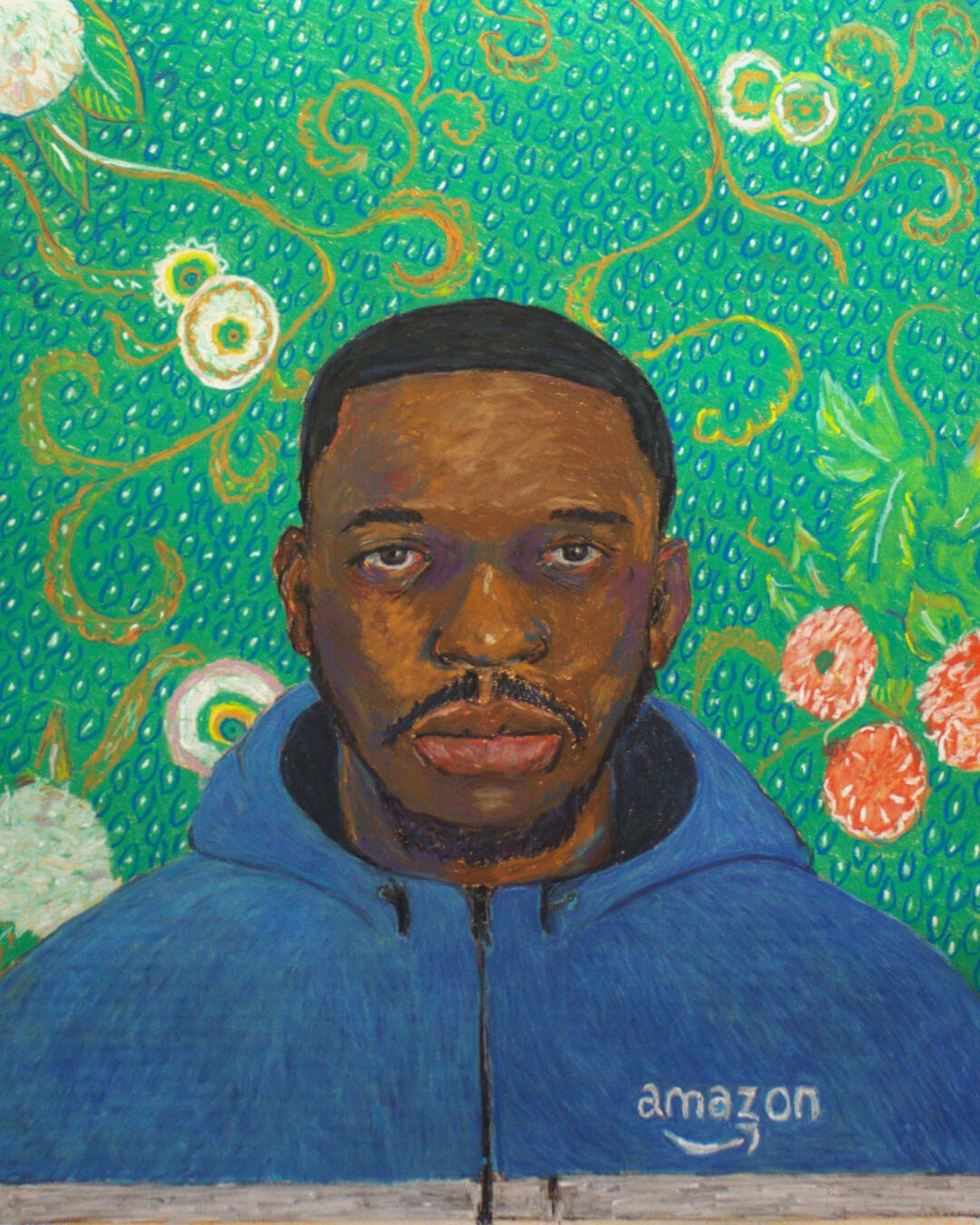
Samuel Isingoma, after Vincent Willem Van Gogh
20x24 inches, Soft Pastel on Paper. 2026
Finding Rest (2024 and ongoing)
Finding Rest is an ongoing series of pastel drawings that explores the dignity of labor and the necessity of rest. Inspired by my experiences working in custodial services, delivery driving, and other forms of service work, the series focuses on quiet moments that often go unnoticed—the pause between tasks, the end of a shift, a moment of stillness, or the simple act of sitting down.Through large-scale figurative drawings, I examine how contemporary life often measures human worth through productivity. In contrast, these works propose rest as something essential to our humanity rather than a reward earned through labor. The individuals depicted are not defined by what they produce, but by their presence, vulnerability, and inherent dignity.Drawing from personal experience, Christian theology, labor history, and contemporary conversations around work and care, Finding Rest asks viewers to reconsider their relationship to labor and the systems that shape daily life. The work is rooted in the belief that rest is not laziness, luxury, or escape—it is a fundamental human need and a quiet act of resistance in a culture that demands constant productivity.Rendered in soft pastel, a medium whose fragility mirrors the vulnerability of the body, these drawings honor workers not in moments of action, but in moments of pause. They invite viewers to slow down, look closely, and reflect on what it means to live a life whose value extends beyond work. Finding Rest is ultimately an invitation to imagine a world where care, presence, and human flourishing are valued as deeply as labor itself.
About
Joel Mulindwa is a Congolese-born Artist, Educator, and Experimental filmmaker based in Western New York. Working primarily in soft pastel drawing, film, and installation, his practice explores themes of labor, rest, memory, and human dignity. Through portraits of workers depicted within their places of employment, Mulindwa examines how rest functions not only as physical recovery, but also as resistance, restoration, and recognition within contemporary labor culture.
Alongside figurative portraits, Mulindwa creates still-life drawings of tip jars, using them as
symbolic objects that question value, gratuity, and deferred recognition. His work is deeply
informed by his own experiences working essential labor jobs and by an ongoing interest in ethics, spirituality, and the emotional lives of workers.Mulindwa received his MFA in Visual Arts from the University at Buffalo and his BS in Business
Administration with minors in Art and Political Science from Houghton University. He currently
teaches Art at Houghton Academy and Houghton University.In addition to his studio practice, Mulindwa works in experimental film, often using 16mm processes, archival imagery, and poetic narratives exploring spirituality, memory, and the body. His films have screened at the Buffalo International Film Festival and the 716 Art Film Festival, where his film "Things We Cherish" received the award for Best Screenplay. His work has also been exhibited throughout Western New York, including at Gallery at Seneca, Buffalo Arts Studio and through community initiatives associated with the Buffalo AKG Art Museum.
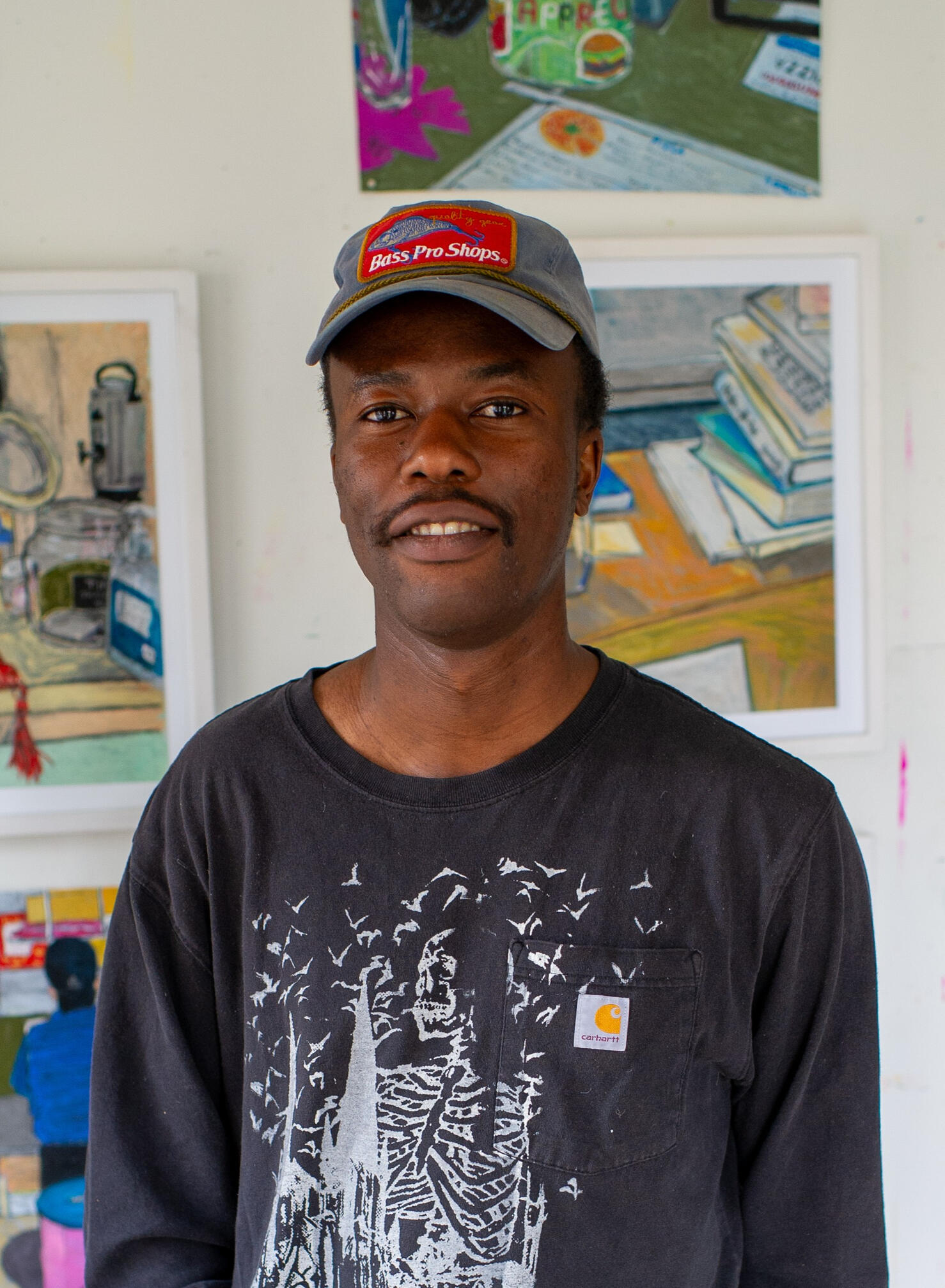
pc. Kaylan Buteyn @kinhouseresidency
Contact
Thank you for your interest in my work. If you would like additional information, have questions about available drawings, are interested in commissioning a piece, or would like to discuss exhibition opportunities, please feel free to get in touch. I welcome inquiries and look forward to hearing from you.
Thank you
Impressions of Gratuity (2024 and ongoing)
Impressions of Gratuity is an ongoing series of pastel drawings that examines the relationship between labor, value, and gratitude through the depiction of tip jars. Found in restaurants, cafés, delivery services, hotels, and countless other workplaces, these ordinary objects serve as quiet reminders of the economic and social realities that shape contemporary labor.What initially attracted me to tip jars was their ability to function as both practical containers and symbolic objects. They ask for generosity while simultaneously revealing the vulnerability of workers whose livelihoods are often dependent on the goodwill of strangers. Though small and easily overlooked, these vessels carry stories of hope, uncertainty, appreciation, and survival.Through repetition, the series transforms the tip jar into a portrait of labor itself. Each jar contains subtle differences—varying amounts of money, handwritten messages, decorations, signs of wear, and traces of the people who interact with them. Together, these objects form a visual archive of service work and the systems that determine how labor is rewarded and recognized.Rendered in soft pastel, the drawings elevate these commonplace objects to the scale and attention traditionally reserved for portraiture. In doing so, they invite viewers to consider the people who exist beyond the frame and the often unseen forms of work that sustain everyday life.
Rather than offering definitive answers, Impressions of Gratuity asks viewers to reflect on what gratitude means, how value is assigned, and what forms of recognition remain possible in a society where human worth is often measured through economic exchange.